
Packaging and films
Evaluate selected films, labels and coated packaging where the code must remain clear without relying on ink adhesion.
A non-contact marking option to evaluate for fine codes, heat-sensitive products and suitable plastics, films, coated packaging and other application-specific materials.
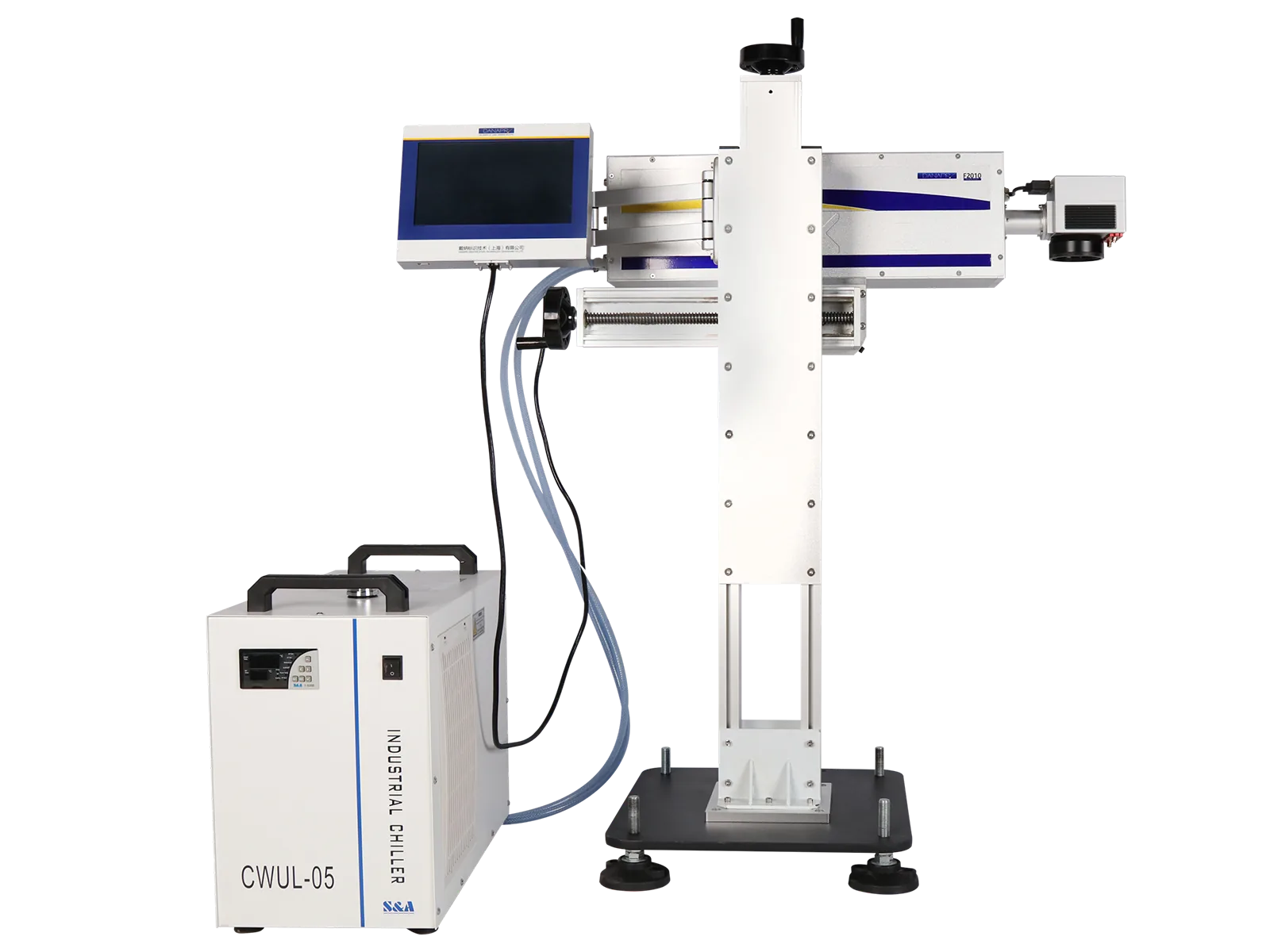
The following model names and rated laser powers are confirmed DANAPR product information. Final configuration must be selected against the actual marking task.
| Model | Rated laser power | Selection note |
|---|---|---|
| DANAPR F2003 | 3 W | Confirm against the material, code, marking field and production test. |
| DANAPR F2005 | 5 W | Confirm against the material, code, marking field and production test. |
| DANAPR F2010 | 10 W | Confirm against the material, code, marking field and production test. |
| DANAPR F2015 | 15 W | Confirm against the material, code, marking field and production test. |
| DANAPR F2020 | 20 W | Confirm against the material, code, marking field and production test. |
| DANAPR F2030 | 30 W | Confirm against the material, code, marking field and production test. |
UV laser equipment should be selected around the substrate, required contrast, code size, production cycle and acceptance criteria. These are common starting points, not guarantees for every material.
Evaluate selected films, labels and coated packaging where the code must remain clear without relying on ink adhesion.
Test the exact polymer, colour, additives and surface finish to confirm contrast, edge quality and material response.
Assess small text, logos, barcodes or 2D codes using the required reading distance and verification method.
The laser interacts with the material surface to create a visible change. The result depends on the material formulation and the selected process settings, so a machine name alone is not enough to predict mark quality.
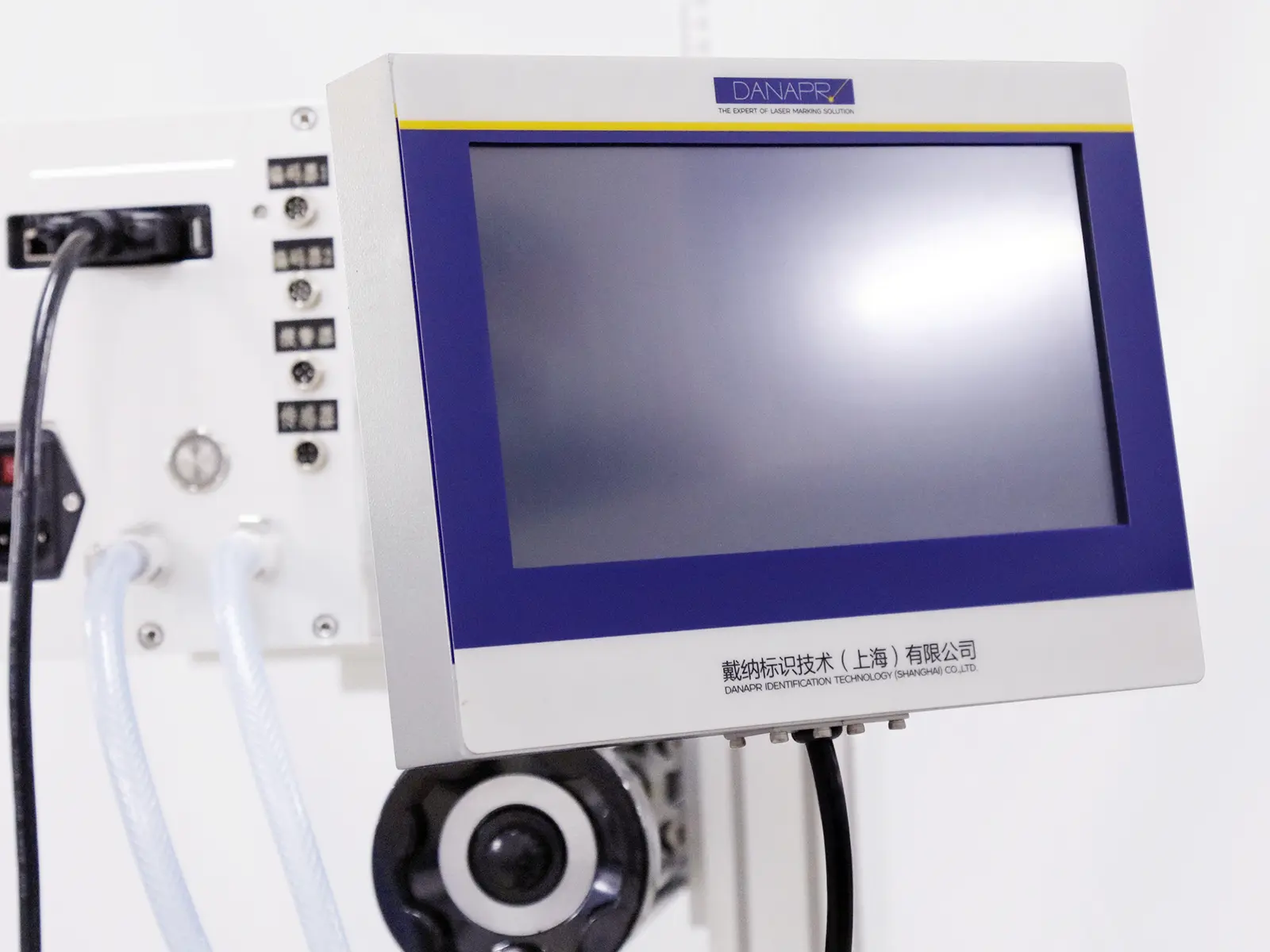
Use the following as an initial routing guide. The actual mark, throughput and equipment configuration still need to be verified with representative samples and line conditions.
| Decision factor | UV laser | Fiber laser | CO2 laser |
|---|---|---|---|
| Common starting point | Fine marks and materials sensitive to heat input | Metals and selected plastics | Many organic and non-metal materials |
| Material review | Polymer formulation, coating, colour and surface response | Metal grade, finish, coating and required mark effect | Absorption, surface finish and thermal response |
| Selection proof | A representative sample, required code, target quality and production conditions | ||
These inputs determine whether UV is suitable and what equipment configuration should move to engineering review.
Substrate, colour, coating, required content, size, contrast and permanence.
Line speed or cycle, product spacing, movement, orientation and available marking time.
Mounting space, focal access, guarding, extraction, environment and operator access.
Visual quality, code readability, adhesion or permanence expectations and approved sample.
UV should not be selected only because a permanent code is needed. Another laser wavelength or an inkjet process may be more practical after the material and production requirement are reviewed.
Share the substrate, required mark and production conditions with DANAPR Marking.