
Inkjet coding equipment

CIJ Printer

Plan non-contact variable coding for moving products around the substrate, ink performance, code requirement, production conditions and maintenance environment.
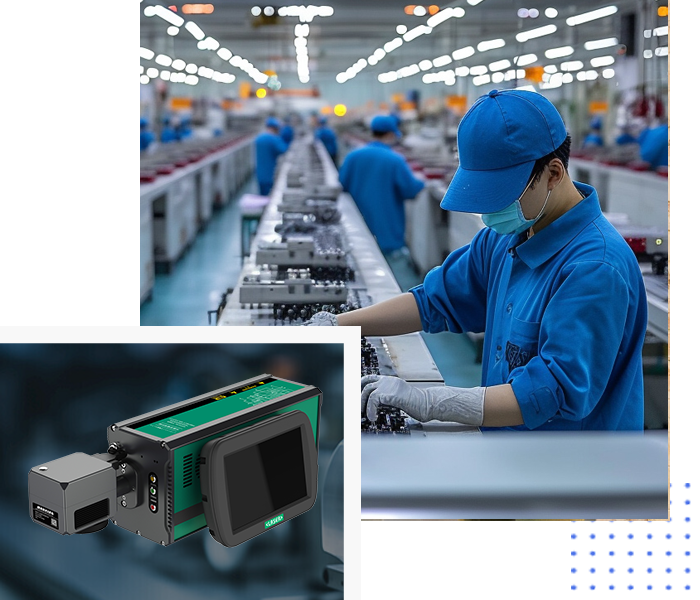
Industrial inkjet coding equipment beside a production line
  • ProcessNon-contact continuous inkjet coding
  • Typical contentText, dates, batches and variable identifiers
  • Critical proofInk adhesion, drying and contrast test
  • Line inputsSpeed, spacing, trigger and print location
Best fit

Where continuous inkjet coding can fit

CIJ is commonly evaluated when a production line needs variable content without physical contact between the printhead and product.

Moving products

Review product spacing, line movement, trigger reliability and the time available for each code.

Varied substrates

Test the exact plastic, metal, glass, paper or coated surface for ink adhesion, drying and contrast.

Variable coding

Define the required date, batch, text, symbol or identifier and how the data reaches the printer.

Engineering selection

Match the printer, ink and line conditions

A CIJ application is a system decision. The print result depends on the product surface, approved ink, product presentation and operating environment.

  • Identify every substrate, colour, coating and surface condition.
  • Define code content, character size, number of lines and print location.
  • Record line speed or cycle, product spacing, movement and trigger method.
  • Confirm printhead access, print distance, mounting and cable routing.
  • Review ambient conditions, cleaning, consumables and maintenance access.
Evidence boundary: No ink compatibility, operating figure, protocol or model capability is implied by this page. Final configuration must be confirmed from approved DANAPR documentation and an application-specific print test.
Examples of variable industrial codes on packaging and components
Representative products and the final code artwork are required for useful print evaluation.
Qualification workflow

Qualify the whole coding process

Ink and printer selection should follow the real product and operating conditions.

  1. Substrate

    Collect representative products for each material, colour, coating and finish.

  2. Ink test

    Assess contrast, adhesion, drying, durability and code readability.

  3. Line review

    Confirm product path, speed, spacing, trigger, mounting and environment.

  4. Acceptance

    Approve the code, position, data, print result and operating conditions.

Process comparison

Compare CIJ with other coding technologies

Use this table to route the application to testing, not to select a final machine without evidence.

RequirementCIJ starting pointAlternative to compare
Moving product with variable codeEvaluate non-contact printing and suitable inkTIJ when packaging, print distance and cartridge process suit the line
Permanent mark without inkNot the normal starting pointLaser marking after material, safety and extraction evaluation
Flexible film before packingPossible only if the line and substrate fitTTO or another packaging-specific process
Code verificationAdd vision when presence, readability or data must be checkedDefine lighting, camera, pass rules and line response separately
Qualification limits

When not to choose CIJ coding

CIJ may not be the best starting point when the substrate, required mark or operating conditions do not support the ink process.

  • No tested ink achieves the required adhesion, drying, contrast or durability.
  • The project requires a permanent material change instead of an applied code.
  • Product movement or printhead access cannot be controlled consistently.
  • The site cannot support the required consumable handling or maintenance routine.
  • A laser, TIJ, TTO or another process performs better in the approved trial.
FAQ

CIJ printer questions

What is a continuous inkjet printer used for?
A CIJ printer is commonly evaluated for non-contact variable coding on products moving through a production line. Suitability depends on the substrate, ink, code, line and environment.
How is ink selected for a CIJ coding application?
Ink selection requires representative substrate testing for adhesion, drying, contrast, durability and the actual production environment. No ink should be selected from a generic material name alone.
What production information is needed before choosing a CIJ printer?
Provide the product and substrate, code content and size, line speed or cycle, product spacing, print location, environment, available installation space and acceptance criteria.
When should CIJ be compared with laser marking?
Compare CIJ with laser when mark permanence, contrast, consumables, maintenance, material response, safety and installation scope have been defined. Test both processes when the choice is not clear.

Have products ready for an ink test?

Share the substrate, code and production-line conditions with DANAPR Marking.

Discuss CIJ Coding