
Define data ownership
Identify the approved source, variable fields, update rules, job selection and operator permissions.
Connect approved production data with the right coding technology, stable product handling, line controls and an optional verification layer.
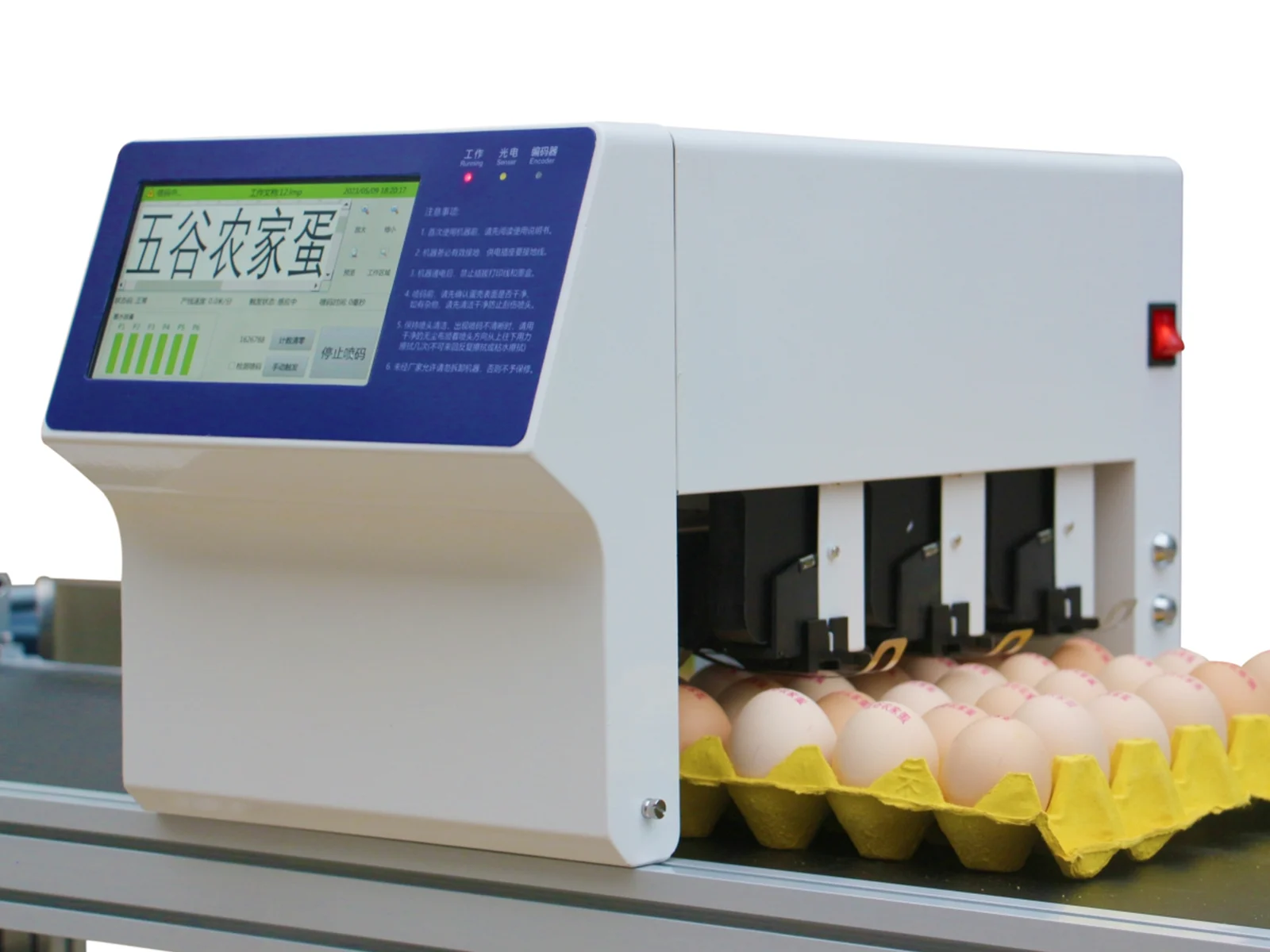
Variable data printing is a system requirement, not a single printer specification.
Identify the approved source, variable fields, update rules, job selection and operator permissions.
Match substrate, permanence, code area, line motion and environment to a tested printing or marking process.
Specify whether the line needs presence checks, readable-code inspection, data comparison, alarms or reject handling.
Each level remains provisional until equipment, data and acceptance documents are approved.
An operator selects an approved job and the printer applies changing production data.
A defined source supplies production data to the selected printing station.
A vision layer checks the agreed code rule and sends a defined result to line control.
Values and supported functions must be confirmed against the selected DANAPR hardware, software scope and application test.
| Field | Define | Acceptance evidence |
|---|---|---|
| Product and substrate | Material, colour, form, orientation and printable surface | Representative sample set |
| Required content | Fixed and variable text, dates, lot, serial, barcode or 2D code | Approved artwork and data examples |
| Output technology | Selected laser, inkjet or transfer process | Approved mark or print sample |
| Print area and performance | Confirm area, resolution and speed for the selected configuration | DANAPR datasheet and line trial |
| Data source and mapping | Source, fields, format, update and error rules | Interface and test specification |
| Product handling | Path, spacing, trigger, encoder if required and mounting | Mechanical integration review |
| Verification response | Inspection rule, result, alarm, stop or reject logic | Approved challenge test |
| Records and traceability | Define required records, retention and system boundary | Customer-approved functional scope |
A code that looks correct is not sufficient when the process depends on changing data.
Freeze data fields, artwork, products, line cycle and system boundary.
Confirm output quality, readability and handling using representative samples.
Validate data mapping, trigger, controls and defined error response.
Run normal and challenge conditions against documented acceptance rules.
The DANAPR equipment shown applies changing printed information across eggs presented in rows. It demonstrates one product-handling configuration, not a universal VDP machine for every industry.
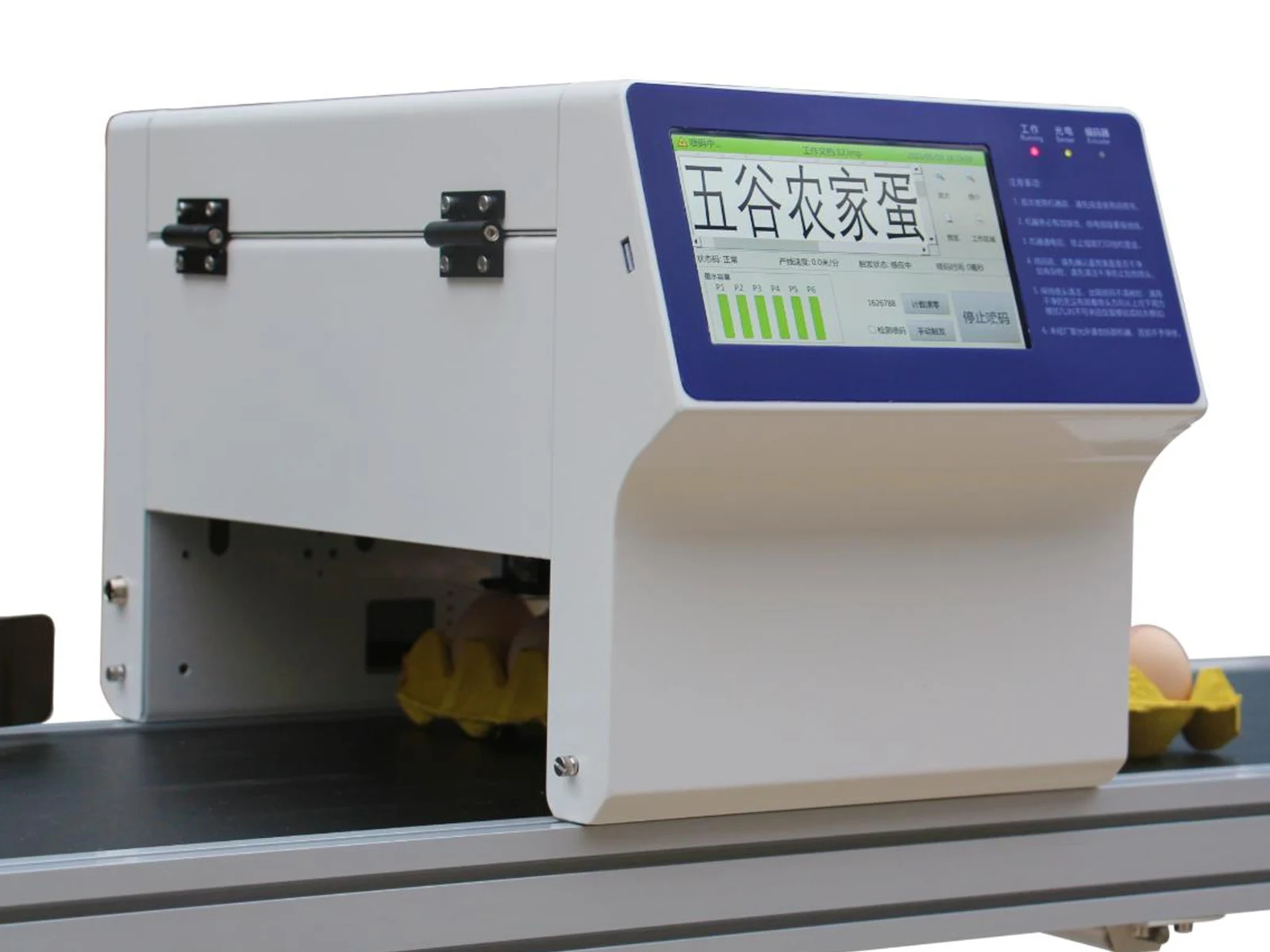
Regulatory obligations, data responsibility and validation remain customer- and project-specific.
ERP, MES, database and protocol connections are included only when documented and approved.
Speed, resolution, accuracy and code quality must be proven for the selected equipment and line conditions.
Send the product, code, data source, line cycle and verification requirement to DANAPR.