
Laser marking equipment

CO2 Laser Marking Machine

Evaluate non-contact marking on paper, wood, glass and selected plastics, films or coatings around the actual substrate and production conditions.
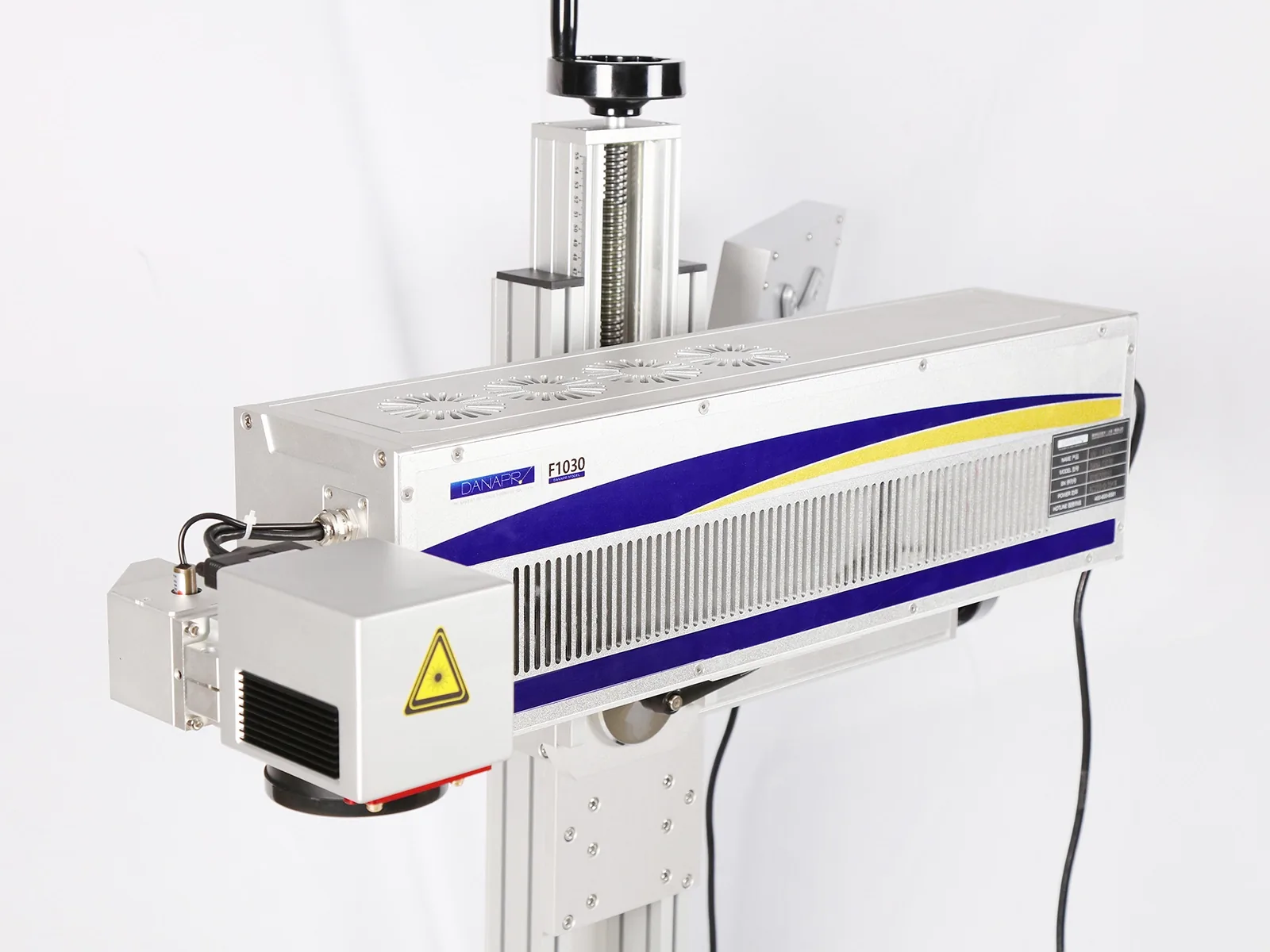
Front view of a DANAPR CO2 laser marking machine
  • Starting materialsPaper, wood, glass and selected polymers
  • Mark definitionContent, size, contrast and surface effect
  • Production inputCycle, movement and marking window
  • Installation scopeGuarding, focal access and extraction
DANAPR model range

CO2 laser marking machine models

The model names below are confirmed DANAPR product information. Rated laser power is shown only where it has been provided; final configuration must be selected against the actual marking task.

ModelRated laser powerSelection note
DANAPR F103030 WConfirm against the material, code, marking field and production test.
DANAPR F106060 WConfirm against the material, code, marking field and production test.
DANAPR F1100100 WConfirm against the material, code, marking field and production test.
DANAPR D7030 D SeriesTo be confirmedD Series rated power and configuration require an approved data sheet.
DANAPR D7060 D SeriesTo be confirmedD Series rated power and configuration require an approved data sheet.
Configuration note: D7030 and D7060 are DANAPR D Series CO2 laser models; their rated powers have not yet been supplied. Model numbers are not used to infer specifications. Final configuration depends on the material, required code, marking field, cycle and representative production test.
Best fit

Where CO2 laser marking can be evaluated

CO2 laser is a common test route for many organic and packaging materials. Layer construction, colour, coating and target mark still determine suitability.

Paper and board

Test cartons, labels or paper-based packs for contrast, surface change and code readability.

Selected films and plastics

Confirm each resin, colour, coating and multilayer structure on production-representative samples.

Wood and glass

Evaluate the required visual effect, surface impact, position, fixturing and handling conditions.

Engineering selection

Test the exact material construction

Material family names are not enough. Coatings, pigments, additives and layer structures can change the mark.
  • Identify substrate, colour, coating, thickness and package or part structure.
  • Define artwork, code size, position, contrast and acceptable surface change.
  • Record production cycle, movement, spacing and available marking time.
  • Map focal access, mounting, guarding, extraction and operator access.
  • Agree visual quality, readability, durability and production acceptance criteria.
Evidence boundary: DANAPR model names and the numeric rated laser powers shown in the table are confirmed. D Series power values, other specifications, performance figures and material compatibility remain subject to approved documentation and representative sample testing.
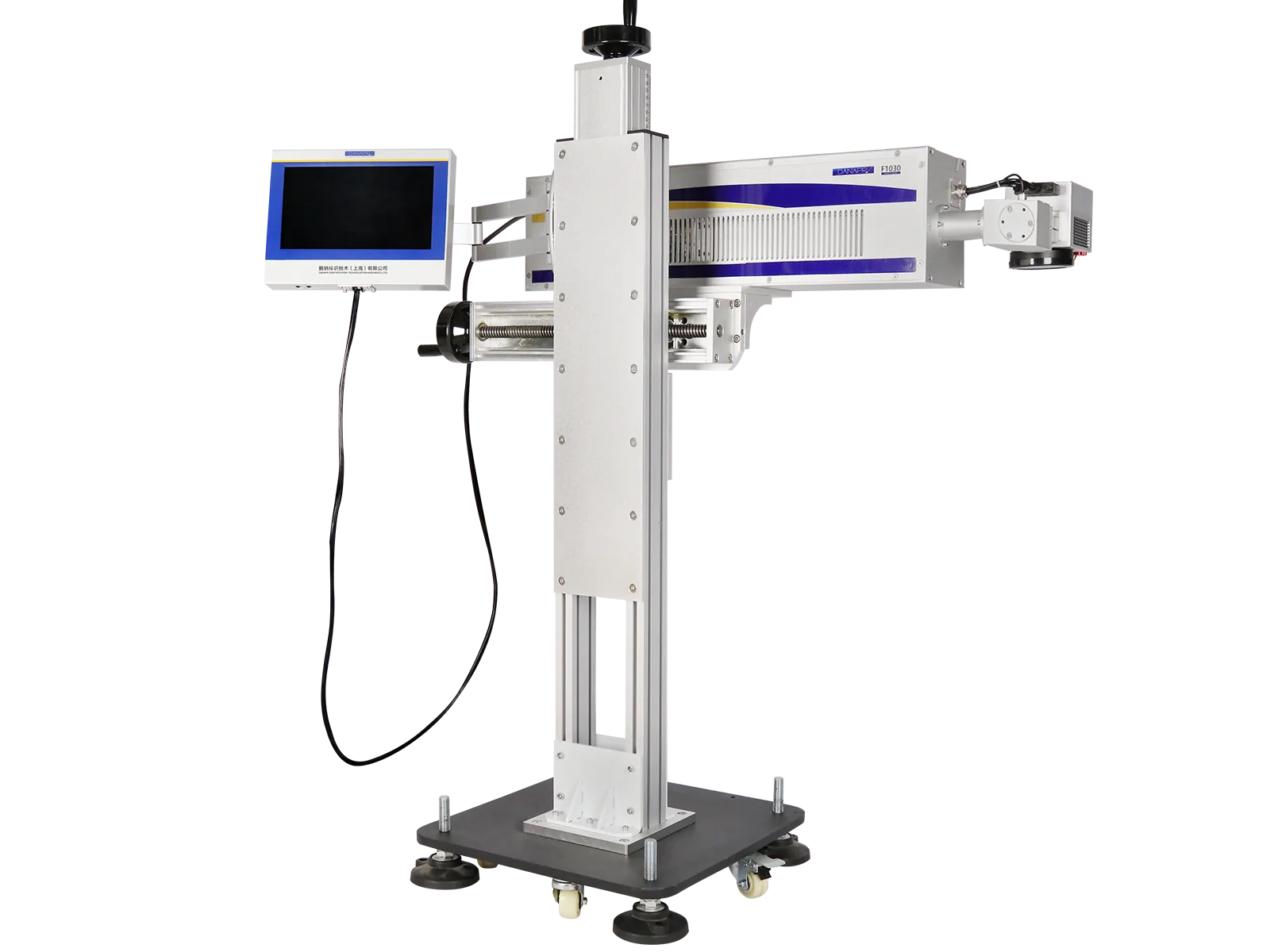
Side view of a DANAPR CO2 laser marking machine
Include each material construction, colour and code format in the application trial.
Qualification workflow

Build evidence before equipment selection

The approved sample and production conditions should become part of the handover.

  1. Sample

    Collect every relevant substrate, colour, coating and structure.

  2. Mark

    Use final artwork, code size, position and target appearance.

  3. Integrate

    Review handling, trigger, focal access, guarding and extraction.

  4. Accept

    Document approved quality, readability and production conditions.

Technology comparison

CO2, UV, fiber or inkjet?

Route the real sample to the process that best meets the mark and integration requirement.

RequirementCommon comparisonProof needed
Paper, board, wood or selected polymerCO2 laser markingMark effect, contrast, heat impact and cycle
Fine mark or controlled heat inputUV laser markingActual material response and code readability
Metal or selected engineering plasticFiber laser markingGrade, finish, contrast or depth and safety scope
Removable variable codeCIJ or TIJ inkjetInk adhesion, drying, print distance and maintenance process
Qualification limits

When not to choose CO2 laser marking

Compare another process when the sample, mark or site conditions do not support the proposed CO2 laser configuration.

  • The sample cannot achieve acceptable contrast, quality or readability.
  • The surface effect or heat input is not acceptable.
  • The code must be removable or changed after application.
  • Product presentation or required guarding and extraction cannot be integrated.
  • UV, fiber, CIJ, TIJ or another process performs better in the approved test.
FAQ

CO2 laser marking machine questions

What materials can be evaluated for CO2 laser marking?
Paper, cardboard, wood, glass and selected plastics, films or coated materials are common evaluation starting points. Exact material construction and finish require sample testing.
How should CO2 laser marking be compared with UV laser?
Compare the actual mark effect, heat input, code size, cycle, substrate response and installation scope on representative samples. Neither technology should be selected from a generic material name alone.
What is needed for a CO2 laser sample test?
Provide each material and colour, package or part structure, target artwork, mark size and position, production cycle, handling method and acceptance criteria.
What installation items must be reviewed?
Review focal access, product presentation, triggering, mounting, guarding, extraction, controls, operator access and the production environment.

Have materials ready for testing?

Share the substrate, target mark and production conditions with DANAPR Marking.

Discuss CO2 Laser Marking