
Laser marking technology

UV Laser Marking Machine

A non-contact marking option to evaluate for fine codes, heat-sensitive products and suitable plastics, films, coated packaging and other application-specific materials.
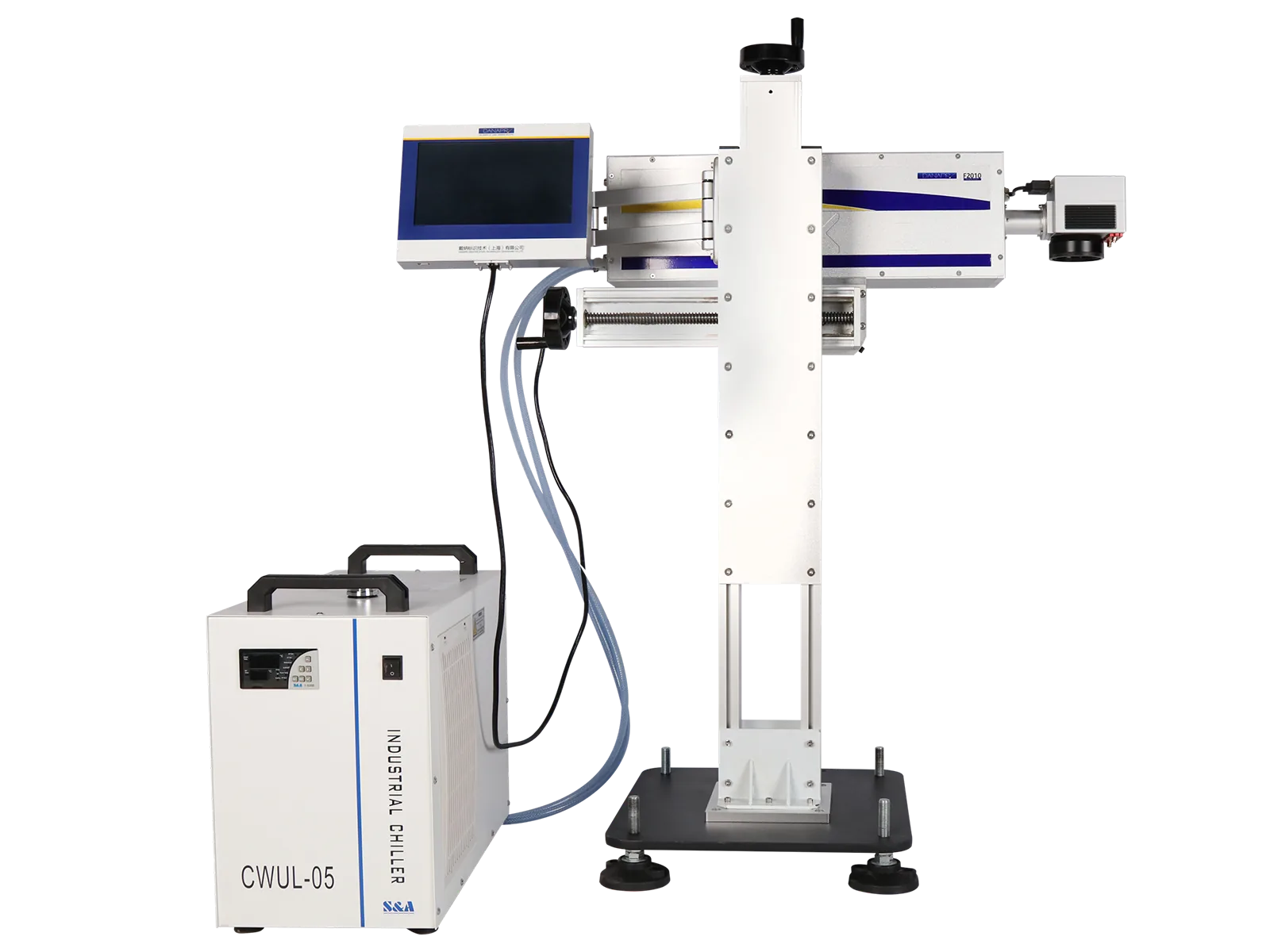
Front view of a DANAPR UV laser marking machine
  • Marking methodNon-contact laser marking
  • Best-fit questionDoes the material need a fine mark with limited heat input?
  • Required proofTest the real material and required code
  • Integration reviewHandling, guarding, extraction and controls
DANAPR model range

UV laser marking machine models

The following model names and rated laser powers are confirmed DANAPR product information. Final configuration must be selected against the actual marking task.

ModelRated laser powerSelection note
DANAPR F20033 WConfirm against the material, code, marking field and production test.
DANAPR F20055 WConfirm against the material, code, marking field and production test.
DANAPR F201010 WConfirm against the material, code, marking field and production test.
DANAPR F201515 WConfirm against the material, code, marking field and production test.
DANAPR F202020 WConfirm against the material, code, marking field and production test.
DANAPR F203030 WConfirm against the material, code, marking field and production test.
Configuration note: Rated laser power alone does not determine marking quality, speed or suitability. Final configuration depends on the material, required code, marking field, cycle and representative production test.
Best fit

Where UV laser marking can fit

UV laser equipment should be selected around the substrate, required contrast, code size, production cycle and acceptance criteria. These are common starting points, not guarantees for every material.

Packaging and films

Evaluate selected films, labels and coated packaging where the code must remain clear without relying on ink adhesion.

Plastic parts

Test the exact polymer, colour, additives and surface finish to confirm contrast, edge quality and material response.

Fine identifiers

Assess small text, logos, barcodes or 2D codes using the required reading distance and verification method.

Technology overview

How the marking decision is made

The laser interacts with the material surface to create a visible change. The result depends on the material formulation and the selected process settings, so a machine name alone is not enough to predict mark quality.
  • Confirm the actual substrate, colour, coating and surface finish.
  • Define the content, size, contrast and permanence requirement.
  • Review line speed or cycle and how the product is presented.
  • Test readability and product appearance against an agreed sample.
Evidence boundary: DANAPR model names and rated laser powers are confirmed on this page. Other specifications and performance figures remain unpublished until approved data sheets and verified sample results are available. Final configuration must be confirmed by an application test.
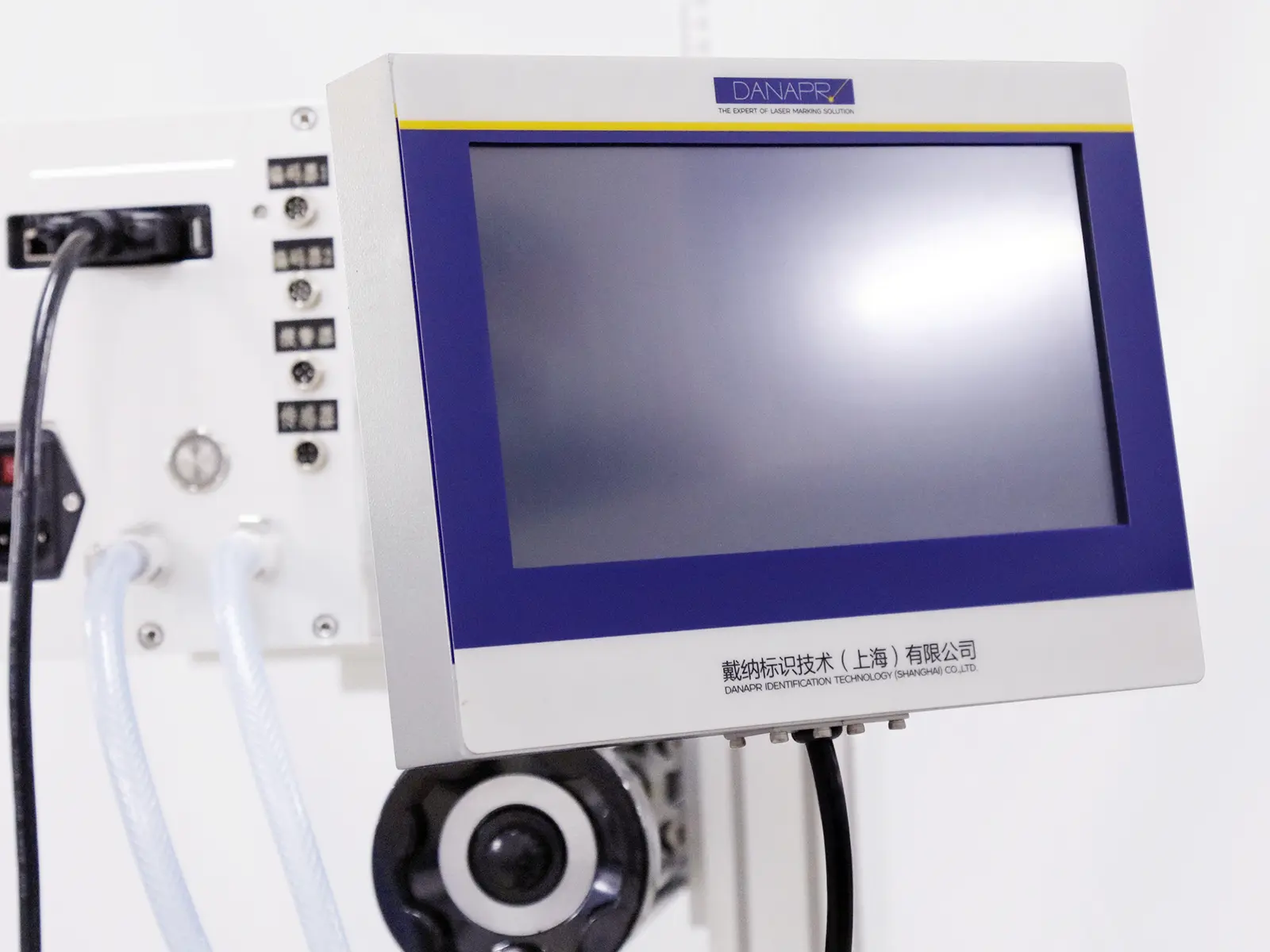
Side view of a DANAPR UV laser marking machine
Examples illustrate different industrial marking applications. They do not establish that one laser configuration is suitable for every shown material.
Technology comparison

UV, fiber or CO2 laser?

Use the following as an initial routing guide. The actual mark, throughput and equipment configuration still need to be verified with representative samples and line conditions.

Decision factorUV laserFiber laserCO2 laser
Common starting pointFine marks and materials sensitive to heat inputMetals and selected plasticsMany organic and non-metal materials
Material reviewPolymer formulation, coating, colour and surface responseMetal grade, finish, coating and required mark effectAbsorption, surface finish and thermal response
Selection proofA representative sample, required code, target quality and production conditions
Selection factors

Define the application before choosing a machine

These inputs determine whether UV is suitable and what equipment configuration should move to engineering review.

  1. Material and mark

    Substrate, colour, coating, required content, size, contrast and permanence.

  2. Production conditions

    Line speed or cycle, product spacing, movement, orientation and available marking time.

  3. Installation scope

    Mounting space, focal access, guarding, extraction, environment and operator access.

  4. Acceptance criteria

    Visual quality, code readability, adhesion or permanence expectations and approved sample.

Qualification

When not to choose UV laser marking

UV should not be selected only because a permanent code is needed. Another laser wavelength or an inkjet process may be more practical after the material and production requirement are reviewed.

  • Fiber or CO2 laser creates a more suitable result on the actual substrate.
  • The code must be removable or changed in a way better served by ink.
  • The product cannot be presented consistently inside the laser marking field.
  • Guarding, extraction or available space makes the proposed integration impractical.
FAQ

UV laser marking machine questions

What materials can a UV laser marking machine mark?
UV laser marking is commonly evaluated for selected plastics, films, coated packaging, glass and other materials that need a fine mark or limited heat input. Material formulation, colour and surface finish affect the result, so the actual sample should be tested before selection.
How should UV, fiber and CO2 laser marking be compared?
Start with the substrate and required mark. UV is often evaluated for fine or heat-sensitive applications, fiber for metals and selected plastics, and CO2 for many organic and non-metal materials. The final choice should be based on sample results and production conditions.
Can a UV laser marking machine be integrated into a production line?
Integration can be evaluated after the product path, line speed or cycle, trigger method, marking distance, mounting space, guarding, extraction and control requirements are known.
When is UV laser marking not the first choice?
UV may not be the first choice when fiber or CO2 laser produces a more suitable mark on the material, when a removable ink code is required, or when product handling and safety requirements make another coding method more practical.
What information is needed for a UV laser marking sample test?
Provide representative product samples, the required text or code, target mark size and contrast, line speed or production cycle, permanence requirement, operating environment and available installation space.

Have a material sample to test?

Share the substrate, required mark and production conditions with DANAPR Marking.

Discuss Your UV Application