
Product-to-line application planning

Industrial Coding & Marking Applications

Start with the real product, material, code and production process, then compare an honest equipment configuration and the proof required for approval.
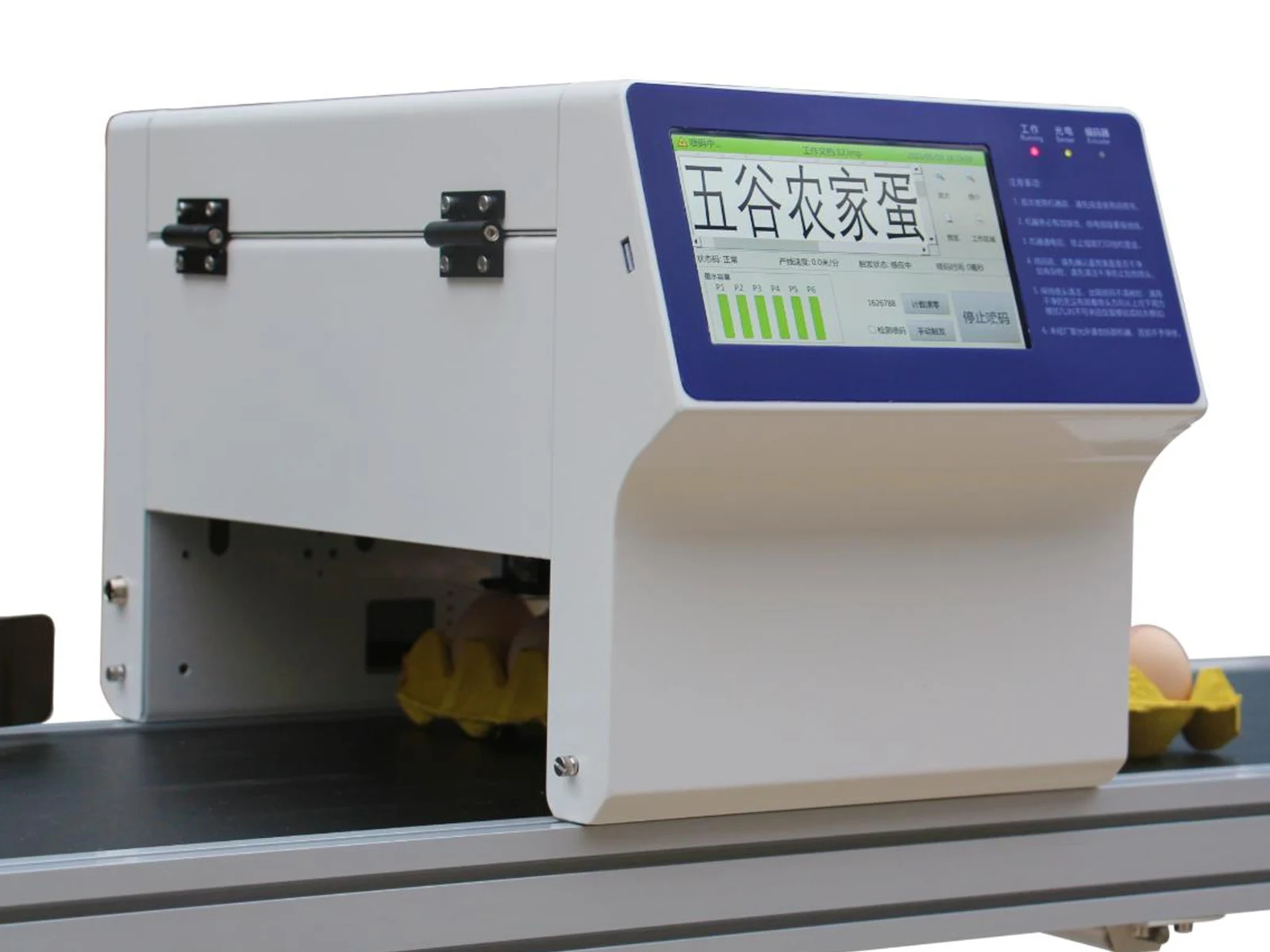
DANAPR egg coding equipment operating over an industrial product conveyor
  • ProductForm, material, colour and surface
  • CodeContent, size, contrast and permanence
  • LineSpeed or cycle, motion and environment
  • SystemControls, verification, data and acceptance
Application families

Choose the product and production context

Use these anchored application summaries as safe navigation until each evidence-complete detail page is released.

Food Packaging Coding

Evaluate dates, lot data and machine-readable codes across actual films, cartons, containers or direct products.

Discuss this application

Pharmaceutical Coding

Separate code application, verification, data handling and validation scope for the defined package and market.

Discuss this application

Plastic Pipe Marking

Review continuous product motion, pipe material, contrast, permanence, marking pitch and line integration.

View Pipe Marking

Bottle Coding

Evaluate bottle material, colour, geometry, moisture, line handling and the available code position.

Discuss this application

Electronic Component Marking

Define material, surface finish, heat sensitivity, code size, readability and precision handling.

Discuss this application

Metal Parts Marking

Evaluate metal grade, coating, mark mechanism, contrast, durability, fixture and safety integration.

Discuss this application
Technology routing

Use the application to narrow the process

The table is an engineering starting point, not a substitute for a test or approved model datasheet.

Application conditionPossible starting processProof required
Fine mark with controlled heat effectUV laser markingMaterial response, contrast, surface change and cycle
Permanent mark on suitable metals or plasticsFiber laser markingMaterial grade, finish, mark result, guarding and extraction
Variable non-contact code on moving productsCIJ or TIJ depending on handlingInk, substrate, drying, print distance and line conditions
Variable code on flexible packaging webTTO or packaging-specific processFilm, ribbon, print area, machine motion and timing
Changing data with inspection requirementVariable data printing and optional visionData map, code test, inspection rule and line response
Configuration levels

Scale from coding to verified, connected production

Use only the system layers supported by the approved project scope.

  1. Standalone coding

    Apply the approved code with controlled product handling.

  2. Line integrated

    Add trigger, encoder if needed, mounting and control response.

  3. Print and verify

    Add a documented vision rule and alarm, stop or reject action.

  4. Connected traceability

    Add approved data exchange and records within a defined boundary.

Engineering workflow

Move from sample to documented acceptance

  • Freeze the product, substrate, package and representative sample range.
  • Define the code artwork, readable size, contrast and durability.
  • Record line speed or cycle, motion, environment and installation constraints.
  • Compare practical technologies and state when each should not be selected.
  • Test the proposed process, controls and optional verification under line conditions.
  • Document the approved configuration, sample and acceptance window.
Case-study rule: Application guidance is not a customer case. DANAPR will publish a case only after customer context, selected configuration, acceptance criteria, verified result and image permission are documented.
Red production text printed on a brown eggshell
A real print sample supports process discussion; it does not by itself prove a customer outcome.
FAQ

Industrial application questions

How should an industrial coding or marking application be defined?
Define the product, material, package form, required code, permanence, line speed or cycle, environment, installation space, verification need, data source and acceptance criteria.
Can one coding technology cover every application?
No. Laser, CIJ, TIJ, TTO and project-specific printing systems have different material, code, handling, maintenance and integration limits. Selection requires representative testing.
When is vision inspection needed?
Evaluate vision when the process requires code presence, readability, position, data comparison or a defined alarm, stop or reject response. The inspection rule must be documented.
Does a coding machine alone provide traceability?
No. Traceability can require data ownership, code generation, printing or marking, verification, record handling, line control and integration. The system boundary must be agreed for each project.

Which product needs a code or mark?

Send the material, artwork, line conditions and acceptance requirement to DANAPR.

Discuss Your Application